
Amaz
Turning a rough event-app concept into a venue-specific engagement platform
Amaz was conceived as a mobile engagement platform for concerts and other live events. The product would provide a venue-specific app for each event while using the same back-end technology and a templated platform model. This created a product tension: every experience needed to feel relevant to a specific venue or event, but the underlying system needed enough consistency to scall across many implementations.
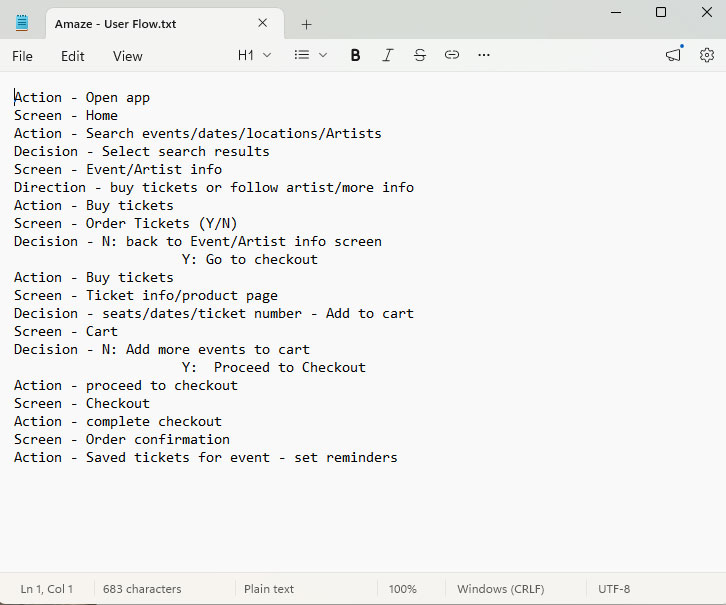
The intended experience went beyond ticketing. Fans could access exclusive content, interact with one another, discover discounts, and participate in prices throughout a concert or event. I served as the design executive for the initiative. I established the company brand and shaped the layout and user flow of the mobile app.The Problem
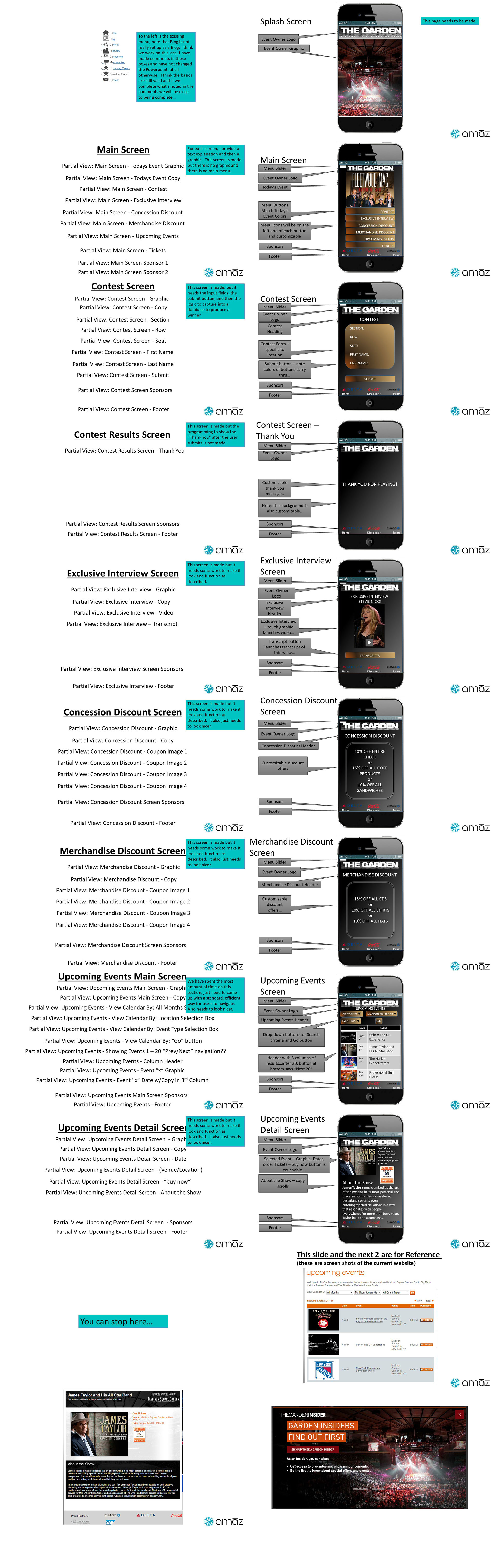
The project began with a PowerPoint-style app mock-up presented by Sales and Partners. It communicated enthusiasm for the concept, but it did not yet provide the structure needed to design or build a usable product. There were no complete wireframes to show how the experience would behave across screens, and the business model had not yet been translated into a clear concert-goer journey.
The design challenge was to turn a business-led thumbnail sketch into a credible mobile experience without losing the flexibility required by a templated platform. The app needed to feel immediate and event-specific while helping users understand what they could do before and during an event.
The constraint that shaped the work
A reusable back-end encouraged consistency, while the venue-specific product promise required relevance and personality. The design therefore had to establish a system of repeatable structures rather than design a single one-off event app.
The Process
Reframing the starting point
The initial PowerPoint was useful as a brainstorming artifact, but it was not treated as a finished product definition. I used it as a starting point for clarifying the product’s brand, content hierarchy, and user flow. The early question was not "How do we make these slides look better?" it was "What does a fan need to understand and do in the context of the event?"
The reframing shifted the work from presentation polish toward experience structure. We considered the event as a time-bound environment in which users might want exclusive content, social interaction, offers, and rewards without having to navigate a complex application.
Establish the brand and the mobile system
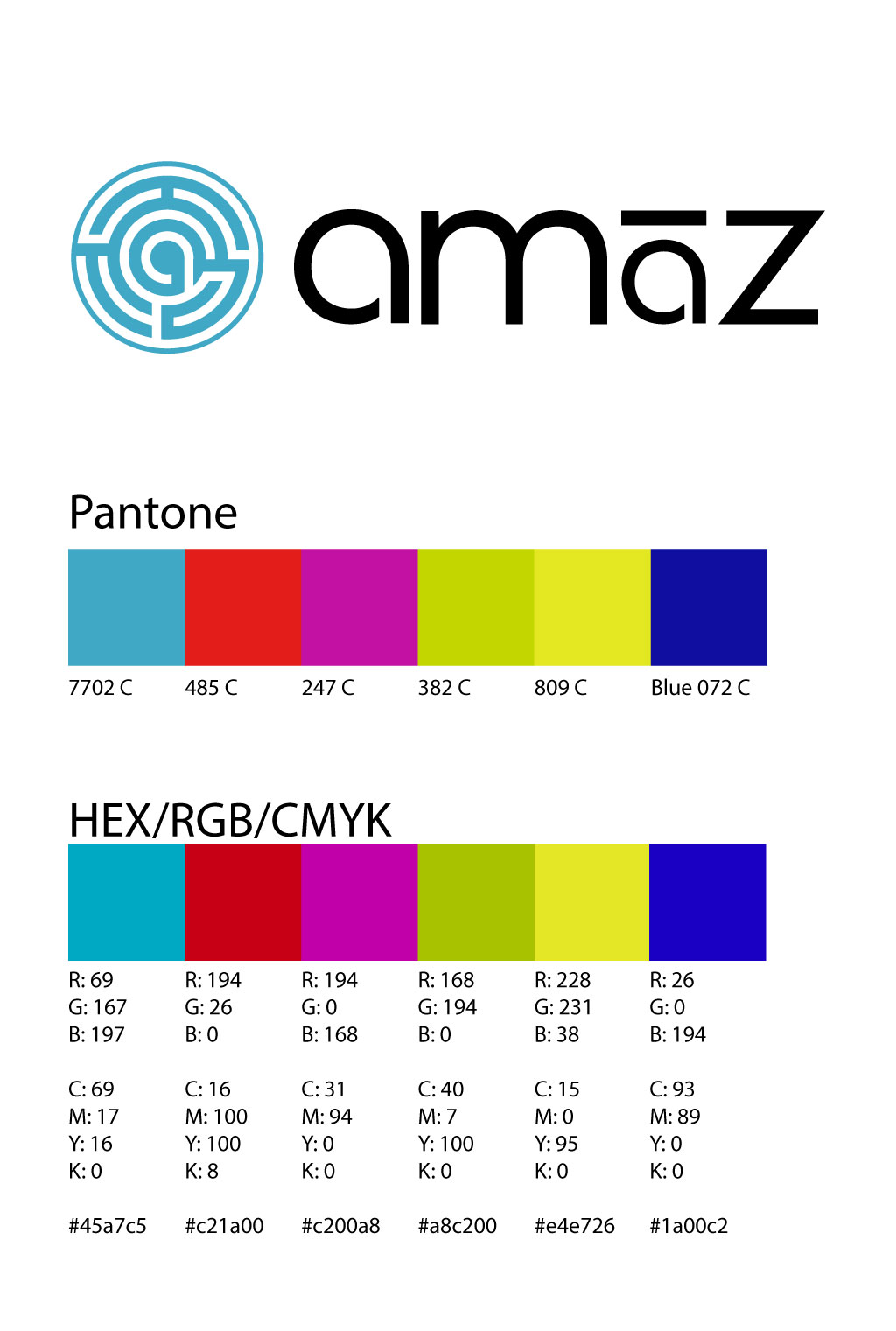
As design executive, I established the company brand and used it to guide the visual language of the app. The design direction needed enough identity to make Amaz recognizable while leaving room for each venue or event to introduce its own content and personality.
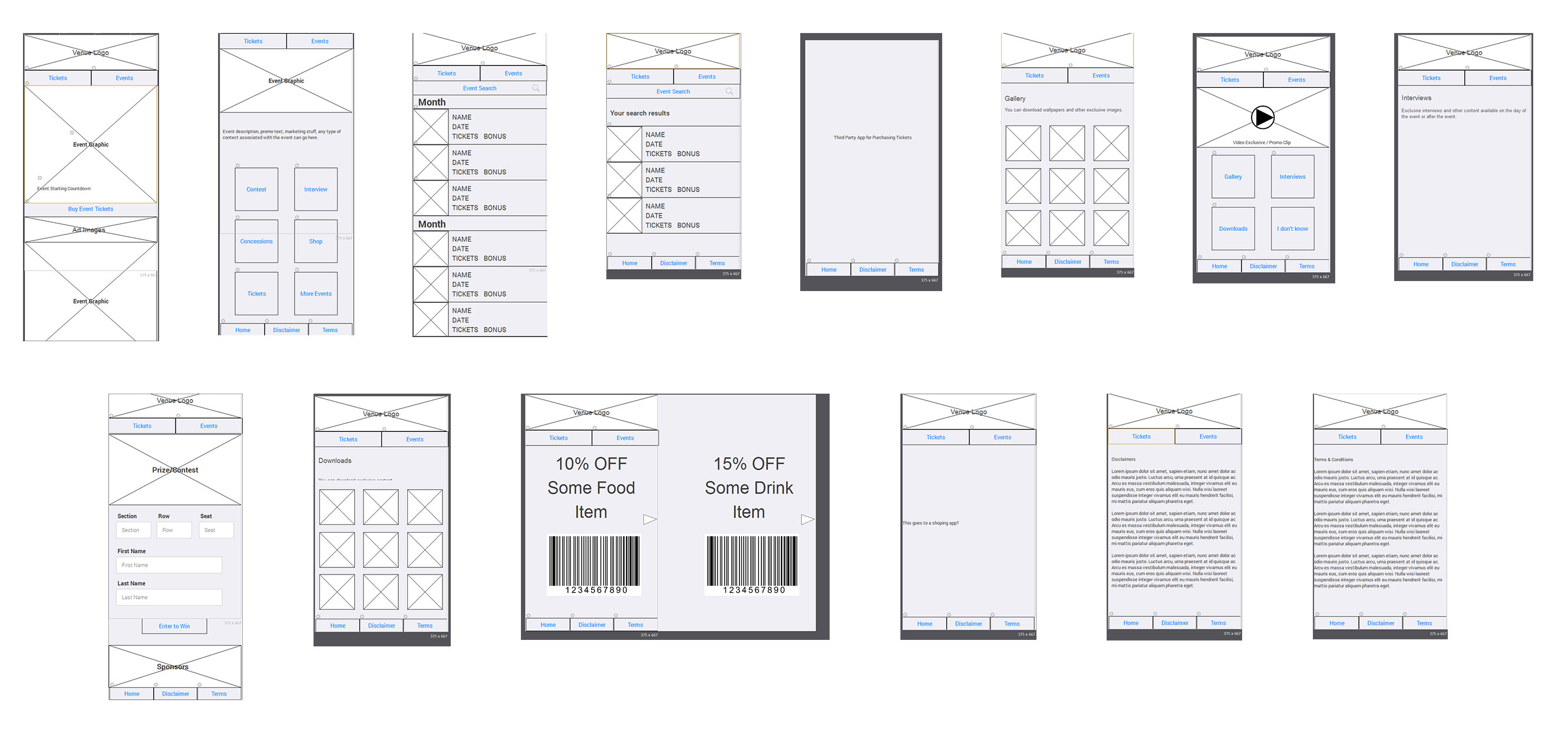
I then developed the mobile layout and user flow. The screens in the original presentation who the experience becoming more structured than the initial concept material, with multiple views working together as a system.
Move from wireframes to demo app
Feedback and direction from stakeholder lunches formed the basis of the wireframes. Once the wireframes were approved, the team moved to a demo app. This created a clear sequence from informal concept discussion to structured screen-level design and then to a prototype that could communicate the experience more realistically.
The prototype stage was particularly important for a product like Amaz. A static feature list could not fully communicate how ticketing, exclusive content, interaction, discounts, and prizes might work together during a live event. The demo app made the proposed experience easier to discuss, even though the initiative did not progress to investor presentation.
The Results
The project reached the prototype stage. The work produced a defined Amaz brand direction, mobile layouts, user flows, wireframes, and a demo application that represented the venue-specific engagement model.
The initiative ended after funding was dissolved and potential investors lost interest before the prototype could be presented to them. This is not a failure of the design process; it is a project status constraint that should be stated plainly. The documented outcome is a credible prototype and a more coherent product direction, not a launched consumer application.
The Impact
The most important impact was clarification. The work turned an early business concept into a product model that could be discussed in terms of user journeys, reusable platform structures, and event-specific content. It also demonstrated how design leadership can create alignment when a startup initiative has energy and ambition but still needs a concrete experience definition.